
The market for second hand solar panels has grown rapidly as EPC contractors, developers, and off-grid installers look for cost-effective solutions for solar projects. Compared with brand-new modules, used panels can provide a 30%–60% lower upfront capital expenditure (CAPEX), significantly reduced ROI payback periods, and immediate supply chain availability. They are often selected for small commercial projects, off-grid systems, replacement projects, and budget-focused installations.
However, buying used photovoltaic modules is not simply about finding the lowest price. The real value of a used solar panel depends on several critical technical factors, including the original brand, power rating, operating temperature coefficient, cell degradation history, physical condition, and remaining power output. For buyers who understand these technical differences, used solar panels can still provide exceptional practical value and high energy yield.
Where Do Second Hand Solar Panels Come From?
Many customers ask where second hand PV panels come from. Unlike new modules that come directly from production lines, used modules usually enter the secondary market through several primary supply channels:
Removed Solar Project Panels (Utility Repowering)
The largest source of used modules comes from utility-scale solar farms undergoing repowering upgrades. Operators replace older 250W–350W legacy modules with high-efficiency 550W+ or 650W+ N-type TOPCon/HJT panels to maximize land power density. Panels removed during these upgrades often have 80%–90% remaining nameplate capacity and years of active service life remaining. Other common reasons include:
Solar system upgrades & capacity expansion
Commercial project renovation
Site relocation & land lease changes
Scheduled maintenance replacement of older modules
These modules have real operating history, so their cell degradation and structural condition need to be thoroughly evaluated before purchase.
Surplus Solar Panels
Some large-scale EPC projects purchase extra modules for future warranty buffer or project replacement. These panels may remain unused in climate-controlled warehouses but are sold off as surplus solar panels upon project completion. Compared with installed modules, surplus stock usually maintains pristine appearance and zero-degradation electrical performance.
Replaced or Overstock Modules
Distributors or contractors may have remaining factory-sealed inventory from previous project lots. These modules may no longer match current project engineering requirements, but they can still offer excellent performance for specific commercial or off-grid applications.
Different Grades of Used Solar Panels
One important factor buyers should understand is that not all used solar panels for sale share the same technical condition. The secondary solar market categorizes modules into clear technical grades based on visual appearance, EL (Electroluminescence) testing, and actual IV curve output:
Grade A: Used Panels With Normal Usage Marks
These modules have been installed and operated under standard field conditions, but they show zero major structural or functional defects:
Normal atmospheric dust or installation clamp marks
Subtle surface scratches on the aluminum frame
Standard frame anodization aging
No micro-cracks or busbar delamination
The remaining power output is typically >85%–90% of original STC ratings. These panels are commonly selected by buyers who want an optimal balance between low price and high commercial reliability.
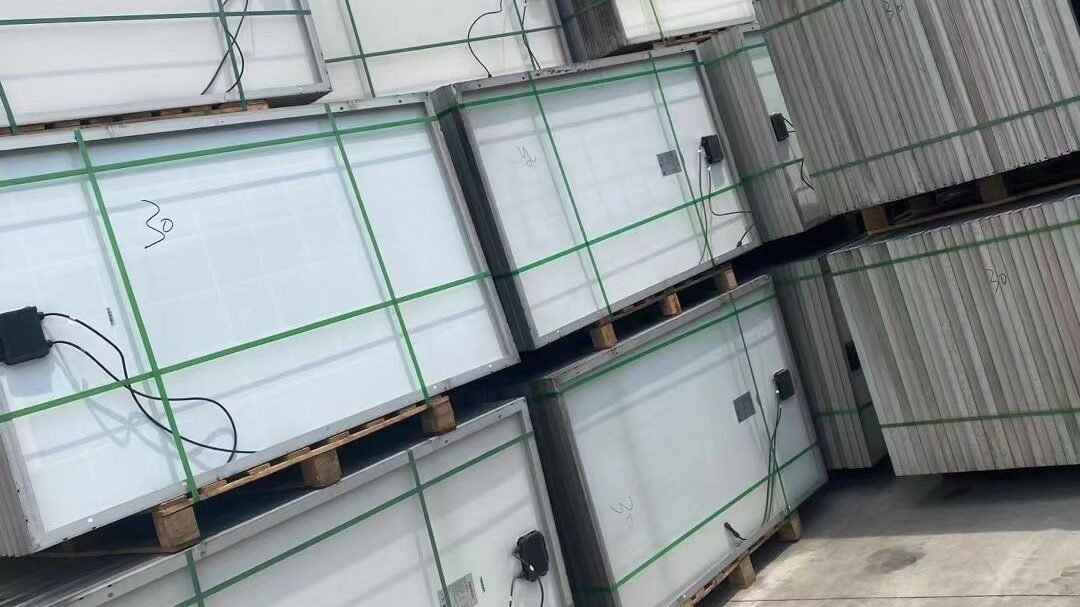
Grade B: Panels With Partial Cell Damage on One Side
Some used modules, especially used bifacial solar panels, may have minor micro-cracks or physical impact affecting part of the cells on one side (e.g., rear glass or outer cell rows). However, this does not always mean the panel cannot work effectively. If electrical testing shows acceptable current continuity, these modules can still generate substantial electricity.
Compared with Grade A panels:
Power output may be reduced ($75\%-85\%$ remaining output)
Overall module conversion efficiency may be slightly lower
The purchase price is significantly more competitive
These panels are often suitable for buyers who prioritize minimizing upfront capital investment costs in non-critical systems.
Grade C: Panels With Cell Damage on Both Sides
Some modules have visible cell cracks, hot spots, or busbar corrosion on both the front and rear sides. They can still operate, but their power generation capability is notably lower. These panels are mainly selected for:
Low-cost agricultural solar projects (Agri-PV)
Remote off-grid lighting applications
Secondary backup power systems
Non-critical DIY installations
Because the remaining output is lower ($60\%-75\%$), the price is usually the most affordable in the market.
How Much Are Used Solar Panels Worth?
A common question from commercial buyers is: How much are used solar panels worth?
There is no fixed universal price because each batch varies in tech generation and condition. The overall market value of used modules depends on:
Manufacturer Tier & Brand Reputation
Power Rating ($P_{max}$ in Watts)
Condition Grade (Grade A, B, or C)
Manufacturing Year & Tech (PERC vs Poly)
Linear Power Output Loss ($0.55\%-0.8\%/\text{year}$)
Total Order Volume & Shipping Logistics
Verifiable Lab Test Results (Flash/EL Reports)
General Value Reference:
| Panel Condition | Electrical Performance | Approximate Value Level | Best Suited Applications |
| Unused surplus modules | 98%–100% Original Output | Higher value, closer to new price | Commercial retrofits, grid-tied systems |
| Grade A used modules | 85%–95% Original Output | Medium-high value | Small commercial, off-grid storage, solar farms |
| Grade B used modules | 75%–85% Original Output | Medium value | Agricultural pumping, backup power |
Grade C used modules | 60%–75% Original Output | Lower value | Non-critical DIY, low-load DC systems |
The price difference between different grades can be significant. A smart buyer should always evaluate the price relative to the Levelized Cost of Energy (LCOE) and expected remaining kWh production, rather than focusing solely on the initial purchase price.
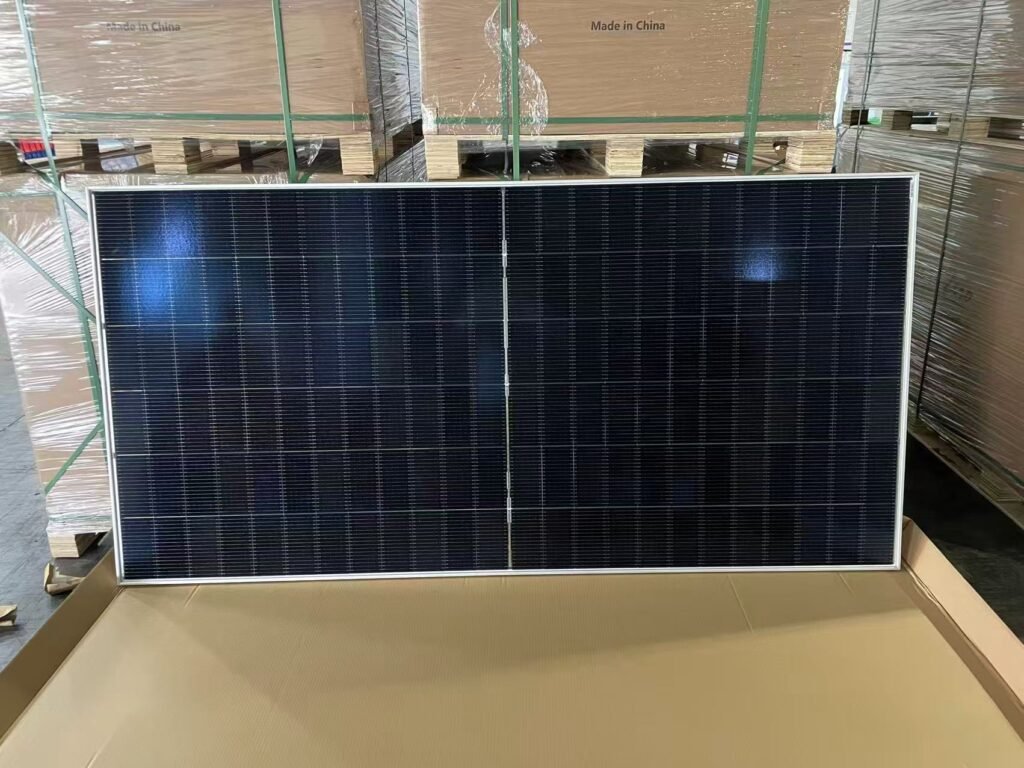
How Brand and Wattage Affect Used Solar Panel Prices
Many buyers think used panels are priced only according to physical condition. In reality, brand reputation and module power rating have a major influence on secondary market resale value.
Brand Value & Tier-1 Premium
Brand reputation remains critical in the secondary solar market. Modules from Tier-1 globally recognized manufacturers usually see stronger market demand because buyers trust their:
Higher-purity silicon wafer quality
Superior encapsulation materials (EVA/POE films)
Predictable linear degradation performance
For example, used modules from Tier-1 brands such as LONGi, Jinko Solar, Trina Solar, JA Solar, and Canadian Solar generally hold a higher resale value. A Grade A used 550W PERC module from a Tier-1 brand will command a higher market price than an unbranded lower-power module due to lower degradation risks.
Power Rating & Balance-of-System (BOS) Costs
Module wattage directly dictates installation labor and racking costs. Higher-power modules are strongly preferred because they help reduce:
Total panel installation quantity
Racking, mounting structure, and rail requirements
Balance-of-system (BOS) cabling, combiner box, and labor costs
| Module Wattage Range | Technology Era | Secondary Market Demand |
| 600W+ modules | Latest TOPCon / PERC large wafer ($210\text{mm}$) | Strongest demand, premium pricing |
| 500W–600W modules | Standard 182mm PERC modules | Stable high demand, high liquidity |
| 300W–450W legacy modules | Older Poly / Standard Mono | Highly price sensitive, off-grid focused |
However, wattage should always be evaluated together with physical condition. A damaged 650W module with severe micro-cracks will not provide better long-term ROI than a well-maintained 550W Grade A module.
What Should Buyers Check Before Purchasing Used Solar Panels?
Before buyers buy second hand solar panels, they should conduct thorough technical due diligence and demand empirical lab testing data.
1. Module Specification & Provenance
Always verify the original manufacturer specifications:
Brand name and original factory model number
Date of manufacture & serial number traceability
Rated nameplate power ($P_{max}$), open-circuit voltage ($V_{oc}$), and short-circuit current ($I_{sc}$)
2. Electrical Testing Documentation
The most critical question is: How much usable power can the panel actually output under STC? Buyers should request:
Flash Test Reports: Confirms actual peak output under Standard Test Conditions ($1000\text{ W/m}^2$, $25^\circ\text{C}$).
I-V Curve Measurement: Identifies voltage/current anomalies and mismatch losses.
EL (Electroluminescence) Inspection: Uses X-ray-like electroluminescence imaging to detect hidden micro-cracks, inactive cell areas, PID (Potential Induced Degradation), and broken cell busbars invisible to the human eye.
3. Physical & Mechanical Inspection
Inspect physical components for operational hazards:
Glass cracks, backsheet burn marks, or delamination
Aluminum frame bend, corrosion, or grounding damage
Junction box IP rating seal integrity, bypass diode health, and MC4 connector weathering
Used Solar Panels vs New Solar Panels
Before deciding whether to purchase used photovoltaic panels, commercial buyers should compare their technical and financial tradeoffs against new modules.
| Feature / Metric | Second Hand Solar Panels | Brand New Solar Panels |
| Upfront CAPEX Cost | 30% – 60% Lower | Standard Market Price |
| Payback Period (ROI) | 1.5 – 3 Years | 5 – 8 Years |
| Factory Warranty | Supplier-backed or batch warranty | 12-Yr Product / 25-Yr Linear Power Warranty |
| Technology Generation | PERC / Poly / Standard Mono | Latest N-Type TOPCon / HJT / BC |
| Quality Verification | Requires third-party Flash & EL testing | Factory guaranteed quality control |
| Supply Stability | Batch & inventory dependent | Highly stable production capacity |
| Best Suited For | Off-grid, Agri-PV, Budget Commercial, Retrofits | Bankable Utility-Scale & Government Tenders |
For utility-scale projects requiring institutional bank financing, new modules remain mandatory. However, for private commercial investments, off-grid systems, and agricultural applications, used panels deliver superior short-term ROI.
Are Used Solar Panels Suitable for Your Project?
Used modules are highly effective cost-reduction tools, but they must align with project parameters.
Ideal Use Cases:
Commercial & Industrial Rooftops: Reduce upfront CAPEX for fast system amortization.
Agricultural & Farming (Agri-PV): Ideal for water pumping, greenhouse power, and livestock shading.
Off-Grid Energy Storage: Perfect for remote telecommunications, cabin systems, and battery charging.
System Expansion & Replacement: Replace damaged legacy modules without changing structural mounting rails.
When to Choose New Panels:
Utility-scale projects requiring bankability and debt financing
Government tenders with strict 25-year performance guarantee mandates
Restricted roof space requiring maximum efficiency ($W/m^2$)
Where to Buy Used Solar Panels?
Many customers search for where to buy used solar panels, but supplier technical transparency is far more important than simply finding the lowest unit price. A professional wholesale supplier should provide:
Full product datasheets and serial number validation
Real batch photos, loading videos, and warehouse inspection access
Clear, standardized Grade A/B/C classification
Container-level batch availability and packing specs
Certified third-party Flash Test and EL inspection reports
Worldwide export packing and sea freight logistics support
For international buyers, transparent communication is vital, as returning container loads of defective modules internationally is logistically complex and costly.
Used Solar Equipment and Inverters
Beyond modules, the secondary market also features used solar equipment, used solar inverters for sale, mounting structures, and secondhand battery storage systems.
Compared with solar modules, used solar inverters for sale require even deeper technical evaluation because power electronics (IGBTs, capacitors, and cooling fans) degrade differently than silicon cells. Before purchasing used string or central inverters, buyers should verify:
Total cumulative operating hours
Internal fault log history and error codes
Internal capacitor condition and maintenance records
Grid code compliance and firmware compatibility
Huaxin Solar: Reliable Used Solar Panel Supply
Different customers require customized project strategies. Whether you need maximum budget savings or Tier-1 brand reliability, Huaxin Solar helps global buyers source tested used modules based on:
Brand Preferences (LONGi, Jinko, Trina, JA, Canadian Solar)
Required Power Classes (300W up to 600W+)
Strict Grade A / Grade B Standards
Project Financial Budgets & ROI Targets
Container Loading & Global Shipping Logistics
For buyers comparing different solar technologies, module specifications, and wholesale container availability, please visit our Second Hand Used Solar Panels Wholesale catalog.
Frequently Asked Questions (FAQ)
Q1: What is the average lifespan remaining on a second hand solar panel?
Most Tier-1 Grade A used solar panels removed during utility repowering have only been in service for 3 to 7 years. Since Tier-1 panels degrade at roughly 0.55%/year, a Grade A module typically retains 15 to 20+ years of reliable operational lifespan.
Q2: How can I ensure used solar panels don’t have hidden micro-cracks?
Visual inspection alone cannot detect cell micro-cracks. You must request an EL (Electroluminescence) Test Report. EL testing passes an electrical current through the module and uses specialized imaging to reveal invisible cell fractures and inactive areas.
Q3: Do second hand solar panels come with a warranty?
While original 25-year manufacturer warranties are generally non-transferable on the secondary market, reputable suppliers like Huaxin Solar provide supplier-backed batch performance guarantees and verified Flash Test reports prior to shipment.
Conclusion
Buying second hand solar panels can be a highly practical, profitable investment when module performance and cell integrity are properly evaluated. The best purchase decision is not always the cheapest option, but the optimal combination of:
Tier-1 Brand Reputation
Appropriate Module Wattage
Rigorous Grade Classification
Verified Remaining Power Output (Flash & EL Tests)
Supplier Transparency & Logistics Reliability
A well-selected used module provides exceptional ROI and rapid payback. For projects seeking long-term reliability and fast amortization, quality second-hand modules are a proven market solution.