
For commercial distributors, engineering procurement construction (EPC) contractors, and utility-scale project developers, selecting the best rated solar panel company is a critical risk-management decision. In the global photovoltaic market, a top tier rating is synonymous with bankability—specifically the BloombergNEF (BNEF) Tier 1 status. This ranking determines whether an international bank will finance a multi-million dollar solar project. When buyers evaluate the pinnacle of this global list, a elite group of manufacturing giants consistently dominates the market share. However, an experienced B2B buyer does not just purchase based on a brand name; they analyze the shifting technology and supply chain logistics behind these ratings.
The Top Tier: How Leading Solar Power Panel Companies Compare
To execute a strategic procurement plan, expanding solar panels businesses must understand the distinct operational strengths and technical focus areas of the world’s highest-rated manufacturers:
Jinko Solar: As a pioneer in the commercialization of N-type Tunnel Oxide Passivated Contact (TOPCon) technology, Jinko has consistently broken mass-production efficiency records. Their modules are highly favored for utility projects requiring maximum power density and low degradation rates.
LONGi Green Energy: Historically the world’s powerhouse for monocrystalline wafer manufacturing, LONGi maintains a highly rated reputation for massive vertical integration. Their strategic focus on HPBC (Hybrid Passivated Back Contact) technology targeted the premium commercial and industrial (C&I) sectors, backed by tremendous corporate financial stability.
JA Solar: Known for a highly conservative and stable financial structure, JA Solar is preferred by global EPCs who require absolute supply chain predictability, robust step-down product tracking, and long-term linear power output warranties that span 25 to 30 years.
Trina Solar: A dominant force in large-format modules, Trina pioneered the 210mm wafer standard. Their dual-glass Vertex series is heavily utilized in harsh environments due to its exceptional resistance to potential induced degradation (PID) and high mechanical load capacity.
While these leading solar power panel companies compete fiercely for global market share, they all share a critical common denominator: their manufacturing core, supply chain infrastructure, and R&D centers are fundamentally rooted in China’s advanced solar ecosystem. To discover more about the market positioning, production capacities, and technical breakthroughs of these industry giants, read our comprehensive Guide to Leading Solar Module Companies.
The Technical Reality Behind "The Best Solar" Equipment
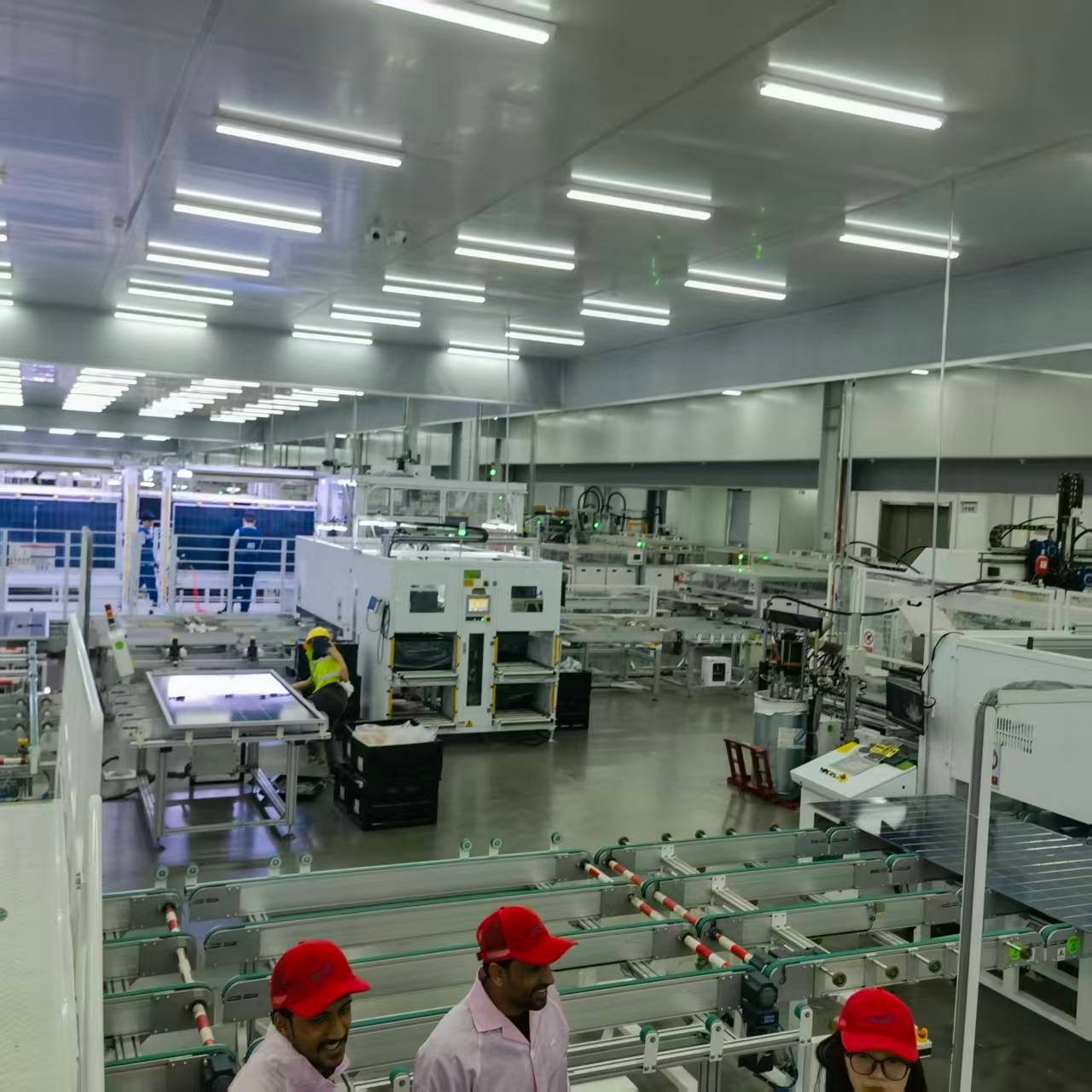
Securing the best solar performance requires looking past marketing brochures and inspecting the actual automation architecture implemented at the factory level. Top-rated quality is not an accident; it is the result of strict engineering safeguards. If you are comparing specific high-efficiency products for your next commercial installation, you can review our curated list of the top 10 solar panels currently driving the B2B market.
The N-Type Technology Dominance: The entire top-tier manufacturing landscape has completely phased out older P-type PERC cells. Premium production now relies on N-type substrates (TOPCon or HJT), which deliver mass-production cell efficiencies exceeding 25%. More importantly, N-type modules offer a superior temperature coefficient (typically -0.30%/°C), meaning they experience significantly less power drop in hot climates compared to legacy panels.
Full-Process Assembly Automation: True tier-1 performance depends on eliminating human error during assembly. Advanced manufacturing lines integrate full-process automation across the cell module line. This includes automated tab cutting, high-precision CCS installation, precise tab-busbar welding, and double EL (Electroluminescence) micro-crack inspections.
Advanced Cell Quality Assurance: Before final packaging, modules undergo automated Open Circuit Voltage (OCV) testing and sorting to ensure perfect electrical consistency across cells. Every step is logged via a traceable MAS (Manufacturing Execution System) system, giving utility buyers a complete data trail of the module’s manufacturing history.
Direct Factory Sourcing vs. Brand Premium Inflation
For growing solar panels businesses, a major bottleneck to scaling operations is the premium markup injected into the supply chain by localized trading middlemen, multi-tier distributors, and localized third-party warehousing. When you buy from regional stock, you are paying for their real estate overhead, secondary transport, and middleman margins—not the actual technology.
Sourcing directly from a pure B2B factory source in China allows global wholesalers to leverage the exact same integrated supply chain, raw material quality, and automated production standards as the top-rated brands, but at container-load wholesale pricing. By shipping direct from the manufacturing core on a pallet-by-pallet or container-by-container basis, you eliminate unnecessary overhead and maximize your cost-per-watt margins.
To review how we optimize international logistics and maintain strict product quality control without middleman markups, you can inspect our detailed FAQ . If you are preparing a bill of materials for an upcoming utility or commercial layout and require a direct, bulk-volume factory price quote tailored to your destination port of discharge, please submit your container requirements via our official Request Factory-Direct Wholesale Quotation portal.